Best Places to Buy Diamond Hoop Earrings Online in 2026
October 9, 20260.90 vs. 1 Carat Diamond: Is the Price Jump Worth It?
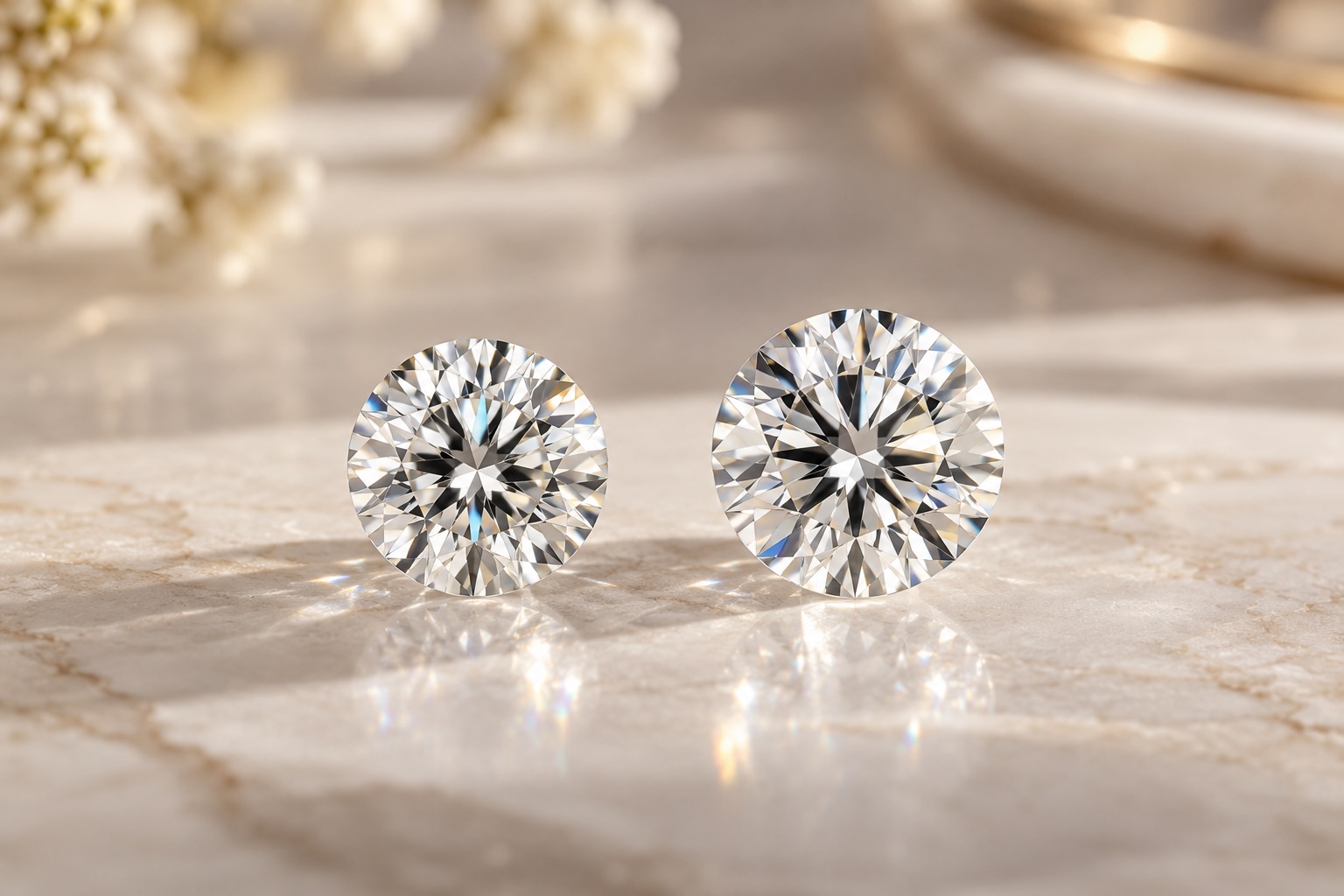
A 0.90 carat diamond can be one of the smartest alternatives to a 1 carat diamond.
The difference in weight is only 0.10 carats, and when both diamonds are well cut, the visible difference from the top can be surprisingly small. However, the price difference can be much more noticeable, particularly with natural diamonds.
That happens because 1.00 carat is an important pricing threshold. Diamonds that reach the full 1 carat mark tend to attract more demand, and cutters also have an incentive to preserve enough rough weight to keep the finished stone above that threshold.
For value-focused shoppers, I would therefore always compare diamonds between about 0.90 and 0.99 carats before automatically buying a 1.00 carat stone.
My general recommendation is simple:
If you care most about value, a well-cut 0.90 to 0.99 carat diamond is often the better buy. If owning a full 1 carat diamond is personally important to you, the premium may still be worthwhile.
You can learn more about how diamond weight works in my diamond carat guide.
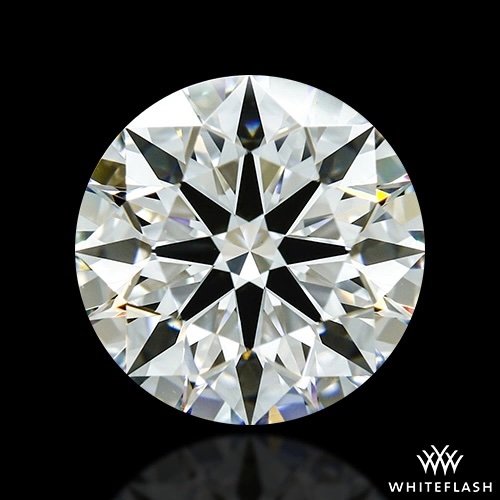
1.060 ct E VS1 A CUT ABOVE® Hearts and Arrows Diamond
0.90 vs. 1 Carat Diamond at a Glance
| 0.90 Carat Diamond | 1.00 Carat Diamond | |
|---|---|---|
| Weight | 0.90 ct | 1.00 ct |
| Typical round diameter | Around 6.2 to 6.3 mm | Around 6.4 to 6.5 mm |
| Visual difference | Small | Slightly larger |
| Price | Usually lower | Premium at 1 ct threshold |
| Value | Excellent | Depends on budget |
| Prestige / milestone | Below 1 ct | Full 1 ct |
| My choice for value | Yes | Only if 1 ct matters to you |
These measurements are only approximate. A deep 1 carat diamond can actually have a smaller diameter than a well-proportioned diamond weighing slightly less.
That is why carat weight should never be judged without looking at millimeter dimensions and cut quality.
How Much Bigger Does a 1 Carat Diamond Look?
Less than many buyers expect.
A well-cut 1 carat round brilliant typically measures somewhere around 6.4 to 6.5 mm across.
A well-proportioned 0.90 carat round may measure roughly 6.2 to 6.3 mm.
1.060 ct E VS1 A CUT ABOVE® Hearts and Arrows Diamond
That means the difference in diameter may only be around:
0.2 to 0.3 mm.
You can see the difference if you place the diamonds directly beside one another, but it is not the dramatic size increase that the jump from “0.90 carat” to “1 carat” might suggest.
The important distinction is that carat measures weight, not visible size.
A diamond carries some of its weight:
- Across its diameter
- In its crown
- In its pavilion
- In its girdle
If too much weight is hidden vertically, the diamond may look smaller than expected.
A 0.90 Carat Diamond Can Look as Large as a 1 Carat
This is where things become interesting.
Imagine two round diamonds.
Diamond A
- 0.92 carat
- 6.30 mm diameter
- Excellent cut
- Efficient weight distribution
Diamond B
- 1.00 carat
- 6.25 mm diameter
- Excessive depth
- Thick girdle
Diamond A actually has the larger face-up diameter.
Yet Diamond B carries the psychologically important 1.00 carat number on its grading report and may cost more because of it.
This is one reason I always recommend checking the actual measurements rather than assuming the heavier diamond must look larger.
You can read more about how proportions affect appearance in my diamond cut guide and depth and table guide.
Why Does 1 Carat Cost More?
Diamond pricing does not increase in a perfectly smooth line.
Instead, certain weights act as magic sizes or pricing milestones.
These include weights around:
- 0.50 carat
- 0.75 carat
- 1.00 carat
- 1.50 carats
- 2.00 carats
Demand is particularly strong at these recognizable numbers.
A shopper may specifically ask for:
“a one carat engagement ring”
rather than:
“a diamond somewhere between 0.90 and 1.00 carats.”
That demand can create a premium.
There is also pressure during cutting to preserve enough weight to finish above the milestone.
A cutter faced with producing either:
0.98 ct
or:
1.01 ct
may have a strong financial incentive to retain the additional weight.
Sometimes this produces a perfectly good 1.01 carat diamond.
Other times it can result in unnecessary depth, a thick girdle, or less efficient weight distribution.
That is why you should never buy a diamond just because it crosses a carat threshold.
Is a 0.90 Carat Diamond Noticeably Smaller?
Usually not by much.
On the hand, the visible difference between a well-cut 0.90 and a well-cut 1 carat round is relatively subtle.
Other factors can have just as much influence on perceived size, including:
- Cut quality
- Setting style
- Band width
- Diamond shape
- Finger size
- Halo or side stones
- Overall brightness
A beautifully cut 0.90 carat round with strong edge-to-edge brightness can have excellent presence.
A poorly cut 1 carat diamond with weak light return may actually appear less impressive despite weighing more.
Where I Would Compare 0.90 and 1 Carat Diamonds
For buyers who prioritize cut quality, I would start with Whiteflash. Its in-house A CUT ABOVE® diamonds make it particularly easy to compare dimensions, proportions, and actual light performance rather than relying solely on carat weight. You can also read my Whiteflash review.
For a much larger searchable inventory, Blue Nile is useful for comparing several 0.90 to 0.99 carat diamonds against stones just above 1.00 carat. Read my Blue Nile review.
Brilliant Earth is another good option if you want to compare both natural and lab-grown diamonds alongside a large selection of engagement ring settings. Read my Brilliant Earth review.
0.90 vs. 1 Carat: Which Offers Better Value?
In many cases, 0.90 to 0.99 carats.
The key is that you can sometimes save money without giving up a meaningful amount of visible size.
That saving can then be used more effectively elsewhere.
For example, rather than buying:
1.00 ct, weaker cut, lower color, visible inclusion
you may be able to buy:
0.93 ct, excellent cut, better color, eye-clean clarity
for a similar or lower budget.
I would choose the second diamond.
Cut has a much greater impact on beauty than gaining another 0.07 carats purely to reach a round number.
The Sweet Spot: 0.95 to 0.99 Carats
If you can find one, the area just below 1 carat can be particularly appealing.
A 0.95 to 0.99 carat diamond may have dimensions extremely close to a 1 carat stone.
A well-cut 0.98 carat diamond is unlikely to create a dramatically different visual impression from a 1.00 carat diamond once set in a ring.
But there is an important complication.
Everyone knows about this strategy.
As a result, attractive diamonds just below major carat thresholds can sell quickly.
There may also be fewer 0.98 or 0.99 carat stones because cutters have a strong incentive to preserve enough rough to reach 1.00 carat whenever possible.
Do not become so focused on finding exactly 0.99 carats that you overlook an excellent 0.92 or 0.94 carat option.
Cut Quality Matters More Than the Extra 0.10 Carats
If you take only one point from this guide, make it this:
Do not sacrifice cut quality to reach 1 carat.
Diamond cut determines how effectively the stone handles light.
A well-cut diamond can display:
- Greater brightness
- Stronger fire
- Better scintillation
- More balanced contrast
- Edge-to-edge light return
Those qualities can also make the diamond appear larger.
If the edges of a poorly cut diamond are dark or weak, your eye may perceive a smaller area of active diamond.
A well-cut stone can appear crisp and bright all the way to the perimeter.
My diamond cut guide explains why this should usually be your first quality priority.
What About Color?
Going slightly under 1 carat may allow you to improve color without increasing your total budget.
However, do not automatically spend the saving on a D-color diamond.
For most round brilliant engagement diamonds, near-colorless grades can offer better value.
Depending on the setting and your sensitivity to warmth, grades such as:
- G
- H
- I
can still appear very white.
White metals such as platinum and white gold tend to reveal body color more readily, while yellow or rose gold settings can make slightly warmer diamonds easier to use.
Read my diamond color guide for more detail.
What About Clarity?
The same principle applies to clarity.
You do not need a flawless diamond.
I would rather buy an eye-clean VS2 or SI1 with excellent cut than pay extra for VVS clarity that provides no visible improvement.
The key question is:
Can you see the inclusion without magnification?
If the answer is no, moving to a dramatically higher clarity grade may provide little practical benefit.
Use my diamond clarity guide to understand which grades usually offer the best balance of beauty and value.
0.90 vs. 1 Carat Lab-Grown Diamonds
The decision is slightly different with lab-grown diamonds.
Lab-grown diamond pricing is much lower than equivalent natural diamond pricing, which means the financial penalty for moving from 0.90 to 1 carat may be relatively modest.
For that reason, I am less likely to deliberately stay under 1 carat with a lab-grown diamond simply to save money.
If the price difference is small and the 1 carat stone is equally well cut, I would probably choose the 1 carat.
However, the same basic rules still apply:
- Compare dimensions
- Prioritize cut
- Check transparency
- Examine color nuance
- Do not buy from the certificate alone
A poorly cut 1 carat lab-grown diamond is still worse than a beautifully cut 0.90 carat stone.
For more information, read my guide to buying a lab-grown diamond.
Does Diamond Shape Change the Difference?
Yes.
The 0.90 vs. 1 carat comparison is easiest with round brilliants because diameter provides a straightforward reference.
Fancy shapes behave differently.
Oval
A well-cut 0.90 carat oval can provide excellent finger coverage because its elongated shape spreads weight over a larger visible area.
Marquise
Marquise diamonds can look particularly large for their carat weight due to their length.
Pear
Pear-shaped diamonds also provide strong visual coverage.
Cushion
Cushions often carry more weight in depth and can look smaller face-up than elongated shapes.
Emerald
Emerald cuts vary considerably in depth and length-to-width ratio, so dimensions matter more than the carat number alone.
For fancy shapes, always compare:
length × width measurements
rather than focusing solely on carat weight.
You can explore the different options in my diamond shapes guide.
Can the Setting Make a 0.90 Carat Diamond Look Bigger?
Absolutely.
A setting can have a substantial effect on perceived size.
Thin Solitaire Band
A narrow band makes the center stone look larger by comparison.
Halo
A halo of smaller diamonds dramatically increases the overall face-up footprint.
Pavé Band
Pavé adds sparkle around the center stone and increases the overall visual impact of the ring.
Bezel
A bezel creates a metal outline around the diamond, which can make its perimeter appear larger.
If the difference between a 0.90 and 1 carat diamond is bothering you, remember that the finished engagement ring matters far more visually than the number written on the grading report.
Read my engagement ring setting guide for more help choosing a design.
Should You Buy 0.90, 0.95, or 1 Carat?
My preference would generally be:
Choose 0.90 to 0.94 Carats If:
- Value is your main priority
- You want to improve cut quality
- You would rather spend on the setting
- The dimensions are good
- You do not care about saying it is “one carat”
Choose 0.95 to 0.99 Carats If:
- You can find a well-cut stone
- You want almost the same visual size as 1 carat
- The price saving is meaningful
- You are comfortable buying just below the threshold
This can be the sweet spot.
Choose 1.00 Carat or More If:
- The milestone matters personally
- You specifically want a “one carat diamond”
- The price difference fits comfortably within your budget
- You are not compromising cut or other important quality factors
There is nothing wrong with paying more for the full carat if that number matters to you.
Jewelry is not purely a mathematical purchase.
My Buying Strategy
I would search a relatively broad range, rather than entering exactly “1.00 carat.”
Try comparing diamonds between approximately 0.90 and 1.05 carats.
Start with Whiteflash if cut quality and detailed performance information are your priorities.
Use Blue Nile if you want to compare a very large number of diamonds around the 1 carat threshold.
And consider Brilliant Earth if you are comparing natural and lab-grown diamonds or want a particularly broad engagement ring setting selection.
Then compare the actual millimeter dimensions, cut quality, color, clarity, imagery, and price, not just the carat figure.
Is the 1 Carat Price Jump Worth It?
Sometimes.
I would pay the premium when:
- 1 carat has personal significance
- The diamond is beautifully cut
- It has appropriate dimensions
- The price difference is manageable
- I am not sacrificing quality elsewhere
I would not pay the premium simply because:
1.00 looks better on the certificate than 0.94.
Nobody looking at your hand can see the grading report.
They can see:
- How large the diamond appears
- How brightly it performs
- Whether the proportions are attractive
- How well the ring suits the wearer
Those are the things I would spend money on first.
Frequently Asked Questions
Is there a noticeable difference between 0.90 and 1 carat?
There is a difference, but it is relatively small.
For well-cut round diamonds, the difference in diameter may only be around 0.2 to 0.3 mm.
Does a 0.90 carat diamond look like 1 carat?
A well-cut 0.90 carat diamond can look very close to a 1 carat diamond, especially once mounted in an engagement ring.
Is 0.90 carat too small for an engagement ring?
No.
A 0.90 carat diamond is a substantial center stone and can look excellent in a solitaire, pavé, halo, or three-stone setting.
Why is a 1 carat diamond more expensive?
One carat is a major consumer pricing threshold. Demand increases at recognizable milestone weights, so the price increase can be larger than the actual increase in visible size.
Is 0.95 carat a good diamond size?
Yes.
A well-cut 0.95 carat diamond can provide almost the same visual presence as a 1 carat stone while potentially costing less.
Is 0.99 carat cheaper than 1 carat?
It can be, although attractive 0.99 carat diamonds can be difficult to find because cutters often try to retain enough weight to reach the 1 carat threshold.
Can a 0.90 carat diamond be bigger than a 1 carat diamond?
In face-up diameter, yes.
A well-spread 0.90 carat diamond can have larger visible dimensions than an excessively deep 1 carat stone.
Should I buy a 0.90 or 1 carat lab-grown diamond?
With lab-grown diamonds, the price difference may be small enough that choosing 1 carat makes sense. However, cut quality and overall material quality should still come first.
Final Verdict: 0.90 vs. 1 Carat Diamond
For pure value, I think 0.90 to 0.99 carat diamonds are one of the smartest places to shop.
A well-cut diamond just below 1 carat can provide almost the same visual size while potentially avoiding some of the premium attached to the 1 carat milestone.
If I had to choose between:
0.92 ct with exceptional cut
and:
1.00 ct with mediocre cut
I would take the 0.92 carat diamond every time.
If both diamonds are equally beautiful and the extra cost is comfortable, then buying the full 1 carat can absolutely make sense, especially if the milestone matters personally.
The important thing is not to let the number on the certificate dictate the purchase.
Compare the actual diamond.
Look at its:
- Diameter
- Cut
- Color
- Clarity
- Proportions
- Light performance
- Price
For cut-focused natural diamonds, start by comparing Whiteflash. For a huge inventory around the 1 carat threshold, browse Blue Nile. If you want to compare natural and lab-grown options alongside a large selection of engagement ring designs, look at Brilliant Earth.
The best diamond is not necessarily the one that weighs exactly 1.00 carat.
It is the one that gives you the best combination of visible size, beauty, and value for your budget.