The Best Places to Buy Yellow Gold Jewelry Online in 2026
September 9, 2026
Best Places to Buy Diamond Hoop Earrings Online in 2026
October 9, 2026Basket vs. Martini Settings for Diamond Stud Earrings: Which Should You Choose?
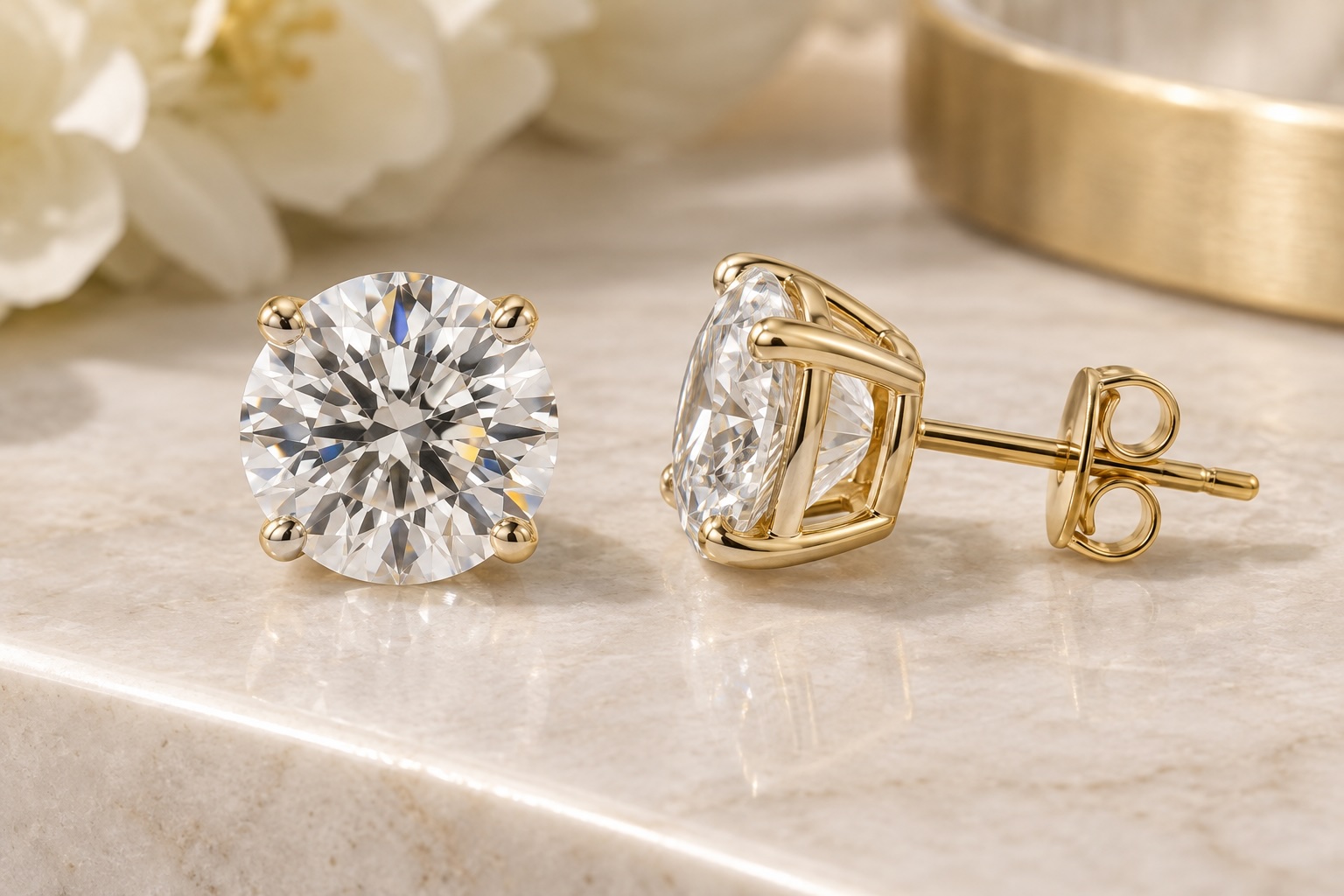
Choosing the diamonds is only half the decision when buying diamond stud earrings. The setting determines how the diamonds sit against the ear, how much metal is visible, how secure the stones feel, and even how large the earrings appear when worn.
Two of the most popular options are basket settings and martini settings.
A basket setting surrounds the lower portion of the diamond with a structured metal framework, usually using four prongs. A martini setting is narrower and cone-shaped, most commonly using three prongs so that the diamond appears to sit inside the top of a martini glass.
Neither design is inherently better.
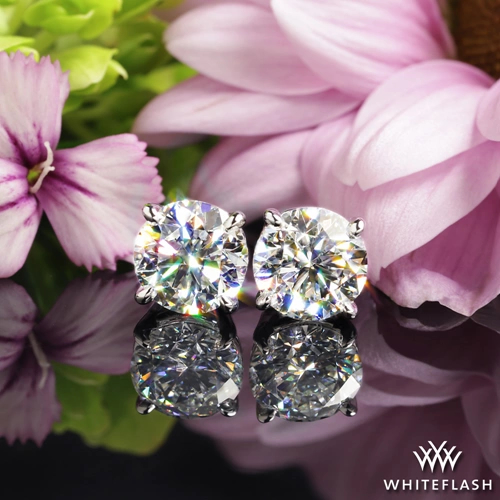
14k White Gold 4 prong Diamond Basket Earrings from Whiteflash
For most buyers, I recommend a basket setting if security, stability, and a traditional appearance are the priorities. I prefer a martini setting if you want minimal visible metal and a diamond that sits particularly close to the ear.
The size of the studs, your ear anatomy, metal choice, and how frequently you plan to wear the earrings should all influence the decision.
If you are still choosing the diamonds themselves, start with my complete Diamond Stud Earrings Guide and my guide to the best places to buy diamond stud earrings online.
Basket vs. Martini Diamond Stud Settings at a Glance
| Basket Setting | Martini Setting | |
|---|---|---|
| Typical prongs | 4 | 3 |
| Profile | Structured basket | Tapered cone |
| How it sits | Usually slightly farther from ear | Often sits closer to ear |
| Visible metal | More | Less |
| Security | Excellent | Very good when well made |
| Stability | Usually excellent | Can depend more on ear anatomy |
| Cleaning | Slightly more metal to clean around | Very open and accessible |
| Diamond visibility | Excellent | Excellent |
| Best for | Traditional look and stability | Minimal look and low profile |
| My preference for larger studs | Usually basket | Depends on wearer |
Both styles can make excellent everyday earrings when properly manufactured. The decision should therefore be based on fit and appearance rather than the assumption that one setting will automatically make the diamond sparkle more.
Cut quality remains far more important to diamond brilliance than choosing a basket instead of a martini.
What Is a Basket Setting for Diamond Stud Earrings?
A basket setting holds the diamond inside a small framework of metal that resembles a basket when viewed from the side.
Most round diamond stud basket settings use four prongs. Metal supports connect those prongs beneath or around the diamond, creating a stable structure that holds the stone securely.
The result is a traditional diamond stud profile.
Basket settings generally position the diamond slightly away from the ear rather than allowing the pavilion to taper directly toward the piercing. That broader base can help distribute the weight of the earring and keep the center stone facing forward.
This becomes particularly useful as diamond studs become larger.
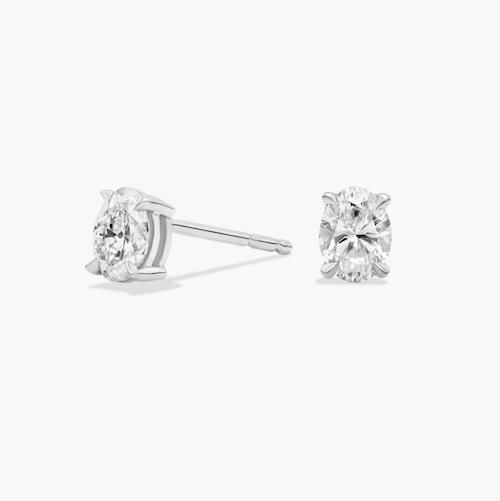
Oval Cut Lab-Grown Diamond Stud Earrings In 14K White Gold
A pair of 0.50 total carat weight studs places relatively little weight on each ear. A pair totaling 2, 3, or 4 carats creates a very different physical relationship between the setting, post, backing, and earlobe.
For larger studs, a well-designed basket can therefore provide a reassuring combination of security and stability.
Basket settings also work with more than round diamonds. Princess, cushion, oval, emerald, and other shapes can all be mounted using appropriately designed baskets.
What Is a Martini Setting for Diamond Stud Earrings?
A martini setting is named after its distinctive shape when viewed from the side.
Instead of a broader basket beneath the diamond, the metal tapers downward into a narrow cone that resembles a martini glass. Round diamond martini studs are commonly made with three prongs positioned evenly around the stone.
The main visual advantage is minimalism.
With only three prongs and very little structure underneath the diamond, less metal is visible from the front. This can make the setting almost disappear and allow the diamond to dominate the appearance of the earring.
Martini settings also tend to sit very close to the earlobe.
For many buyers, this is exactly what they want. The diamond looks neat and low-profile rather than appearing to project outward.
However, fit varies from person to person. Because the underside of a martini setting narrows to a point, some wearers find that it settles slightly into the piercing. Others find martini studs exceptionally comfortable.
This is why comfort cannot be decided entirely from a product photograph.
Basket Settings Usually Provide More Stability
Stability is one of the strongest arguments for choosing a basket setting.
The bottom of a basket is broader than the tapered base of a martini setting. This can give the earring a larger area from which to rest against the earlobe.
With heavier diamonds, that can make it easier to keep the stud facing forward rather than tilting downward.
This is not solely determined by the setting.
Stud position is also affected by:
- Diamond weight
- Post position
- Earlobe thickness
- Piercing placement
- Backing size
- How tightly the backing is worn
A poorly positioned piercing can make even a well-designed basket stud droop.
For larger earrings, supportive backs can make a considerable difference. Larger friction backs, secure locking systems, or support discs can help stabilize the earring.
My Diamond Stud Earrings Guide covers the different backing options and the role they play in security and comfort.
For someone buying substantial everyday studs, I generally lean toward a four-prong basket with an appropriately supportive back.
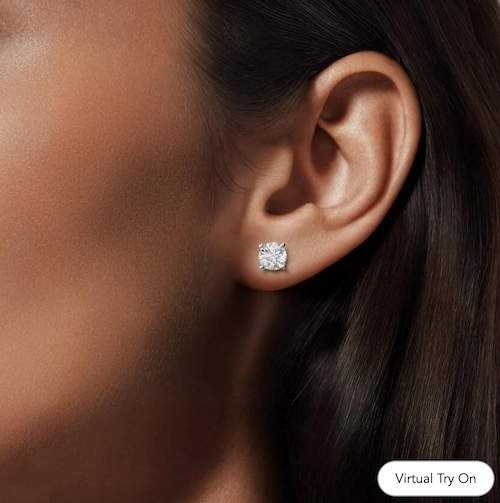
Perfect 4-Prong Certified Lab Diamond Stud Earrings (2 ct. tw.) in 18K White Gold
Martini Settings Offer the Most Minimal Appearance
The strongest argument for a martini setting is appearance.
Three small prongs hold the diamond, while the narrow cone beneath it is difficult to see from the front.
This creates an exceptionally clean look.
If the objective is:
diamond first, setting second
a martini is difficult to beat.
The three-prong arrangement also gives a round diamond a subtly triangular visual framework rather than the squarer outline created by four evenly spaced prongs.
Whether you notice that depends on the size of the studs and how closely you examine them.
At normal conversational distance, most people will simply see the diamonds.
This is also why I would not choose a setting primarily because someone claims it “lets more light into the diamond.”
A well-cut round brilliant gathers and returns light according to its proportions and facet relationships. The difference between an open basket and an open martini is much less important than the quality of the diamond’s cut.
Read my complete diamond cut guide before sacrificing cut quality to increase carat weight or setting complexity.
Where I Recommend Buying Diamond Stud Earrings
My first choice for quality-focused diamond studs is Whiteflash. Whiteflash offers both basket and martini-style settings and is particularly strong for buyers who want precision-matched, high-performance diamonds. Read my complete Whiteflash review.
Blue Nile is a strong alternative if you want a much broader range of diamond sizes, metals, and price points. See my Blue Nile review.
I also recommend Brilliant Earth for shoppers who want natural or lab-grown studs alongside a broad jewelry collection and modern styling. Read my Brilliant Earth review.
Does a Martini Setting Make Diamond Studs Look Bigger?
A martini setting can make a diamond appear slightly more visually exposed, but it does not actually increase its face-up dimensions.
The effect comes from the reduction in visible metal.
A four-prong basket places four small points of metal around the perimeter of a round diamond. A three-prong martini removes one of those prongs and usually reduces the amount of surrounding structure.
That can create the impression of seeing more diamond.
However, the actual visible size of a stud is primarily determined by the diamond’s millimeter diameter, not whether it is mounted in a basket or martini.
This is an important distinction when buying stud earrings.
Two diamonds can have identical carat weights but slightly different diameters because of differences in depth and proportions. For matched earrings, I want the diamonds to be close not only in carat weight but also in:
- Diameter
- Cut quality
- Color
- Clarity
- Overall visual performance
My guide to buying diamond earrings online explains why matching diameter is especially important for studs.
Which Setting Sits Closer to the Ear?
The martini setting usually sits closer to the ear.
Its cone-shaped profile allows the pavilion of the diamond and the surrounding metal to taper toward the piercing rather than sitting on top of a broader basket.
For many people, this produces an attractive flush appearance.
A basket typically holds more of the setting above the earlobe. Depending on the design, the diamond can therefore project slightly farther forward.
Neither is automatically more flattering.
Some wearers prefer the close-fitting appearance of martini studs. Others like a basket because the diamond feels more clearly supported against the surface of the ear.
The difference becomes more relevant with larger studs.
A tiny diamond set a millimeter closer or farther from the ear creates little practical difference. With a substantially larger stone, setting height can affect both appearance and how stable the earring feels.
If you are buying expensive studs, look at the side profile of the actual setting, not only a front-facing product image.
Can Martini Settings Stretch an Ear Piercing?
A common concern with martini settings is that the tapered underside can sit partly inside the piercing.
Whether that happens depends heavily on the individual wearer.
The shape of a martini setting concentrates the area immediately behind the diamond into a narrow point. A basket has a wider structure and therefore rests differently against the earlobe.
Some wearers find martini earrings sit perfectly comfortably for years. Others find the pointed profile less supportive, particularly with heavier diamonds or larger piercing holes.
For that reason, I would be more cautious about martini settings if:
- The studs are particularly large
- Your piercings already feel stretched
- Your earrings tend to droop
- Your piercing sits relatively low on the lobe
- You prefer a broad supporting surface
In those circumstances, a basket may be the safer choice.
A larger earring back can also improve support significantly.
If you already own heavy earrings, think about how they currently sit on your ear before deciding.
Which Setting Is More Secure?
Both basket and martini settings can be very secure when properly made.
However, a four-prong basket provides one additional prong compared with the common three-prong martini.
That creates a degree of redundancy.
If one of four prongs loosens slightly, three remain around the stone. A three-prong setting naturally has less redundancy.
That does not make martini settings unsafe.
Three-prong diamond earrings are extremely common and can provide years of secure wear. The quality and condition of the prongs matter more than simply counting them.
I would prioritize:
- Well-made prongs
- Correct diamond seating
- Durable precious metal
- Routine inspection
- Secure earring backs
over assuming that every four-prong setting is automatically superior.
For particularly expensive or larger diamond studs, I personally prefer the additional reassurance of four prongs, especially if the earrings will be worn frequently.
Three Prongs vs. Four Prongs: Does It Affect Sparkle?
The number of prongs should not be treated as a substitute for diamond cut quality.
A common claim is that three-prong martini settings allow significantly more light into a diamond and therefore create dramatically more sparkle.
That oversimplifies how a well-cut diamond works.
A properly cut round brilliant is designed to collect light primarily through its crown and return that light toward the observer. Light entering through the pavilion is not the main source of the brightness you see face-up.
Reducing visible metal can make the diamond look more open and less obstructed aesthetically, but cut quality remains the dominant factor in brilliance.
If the budget forces a choice between:
better diamond + four-prong basket
and
weaker diamond + three-prong martini
I would choose the better diamond every time.
This is especially important with stud earrings because two poorly cut diamonds will look flat regardless of how little metal surrounds them.
Basket Settings Can Be Easier for Larger Diamond Studs
As total carat weight increases, the practical advantages of a basket become more significant.
Remember that diamond stud weights are usually quoted as total carat weight for the pair.
A 2.00 ctw pair generally contains approximately two 1 carat diamonds.
A 4.00 ctw pair generally contains approximately two 2 carat diamonds.
Those larger diamonds put considerably more weight on the ear.
For substantial studs, a basket can provide:
- A broader contact point
- Additional prong security
- Greater structural rigidity
- A traditional setting profile
- Better support for some ear shapes
This does not mean large diamonds cannot be mounted in martini settings.
They can.
But I would pay closer attention to fit, backing size, post location, and the wearer’s anatomy as carat weight increases.
For buyers purchasing significant studs, building the earrings from individually selected diamonds can also be preferable to buying a generic preset pair.
My Diamond Stud Earrings Guide explains the difference between preset and build-your-own earrings.
Martini Settings Work Particularly Well for Smaller Studs
Martini settings are particularly attractive for smaller and medium-sized diamond studs.
At these weights, the reduced amount of metal creates a delicate appearance without the earring becoming particularly heavy.
For example, someone buying approximately:
- 0.50 ctw
- 0.75 ctw
- 1.00 ctw
- 1.50 ctw
may find that a three-prong martini provides exactly the clean appearance they want.
The diamonds sit close to the ears, and the three-prong construction allows the round shape to remain visually dominant.
As size increases, comfort and support deserve progressively more attention.
There is no exact carat weight at which martini settings suddenly become inappropriate because ears and settings differ considerably.
My recommendation is simply to place increasing emphasis on stability and backing support as the diamonds become heavier.
Basket vs. Martini Settings for Lab-Grown Diamond Studs
Lab-grown diamonds have made larger stud earrings much more affordable.
That makes the basket-versus-martini decision particularly relevant.
A buyer who might previously have purchased 1.00 ctw natural studs may now be considering 2, 3, or even 4 ctw lab-grown earrings within the same general budget.
At those larger sizes, the physical weight and diameter of the diamonds become more noticeable.
The same setting principles apply regardless of origin:
Basket: stronger choice when support and stability are priorities.
Martini: stronger choice when minimal metal and a low profile are priorities.
A lab-grown diamond is not lighter than a comparable natural diamond simply because it was grown in a laboratory. Both are diamond, so stones of comparable proportions and carat weight have comparable physical weight.
Do not let the lower price of lab-grown diamonds encourage you to choose enormous studs without considering how they will actually sit on the ear.
Natural vs. Lab-Grown Diamond Studs
The setting decision is independent of whether you choose natural or lab-grown diamonds.
Both can be mounted in basket or martini settings.
Natural diamonds may appeal to buyers who value geological origin and rarity.
Lab-grown diamonds can provide significantly more carat weight for the same budget.
Whichever origin you choose, the most important visual factor remains cut quality.
Diamond earrings are seen from multiple angles and move constantly with the wearer. A well-cut pair produces lively flashes even when viewed from a distance.
I would rather own smaller, beautifully cut studs than larger earrings with weak light performance.
Matching is equally important. The two diamonds should look like a deliberate pair rather than simply having approximately the same carat weight.
Read my guide to the best places to buy diamond stud earrings online for more detail.
White Gold, Yellow Gold, Rose Gold, or Platinum?
Basket and martini settings are available in several precious metals.
14K White Gold
One of the most popular and practical choices.
It offers good durability and creates a bright, neutral appearance around the diamond.
18K White Gold
Contains more pure gold than 14K and generally costs more.
It is still a good option, although 14K may be more practical for frequently worn earrings.
Yellow Gold
Yellow gold creates a warmer appearance and can be particularly attractive if you already wear yellow gold jewelry.
My guide to the best places to buy yellow gold jewelry explains the differences between 14K and 18K in more detail.
Rose Gold
Rose gold provides a softer, warmer appearance and can create attractive contrast against a bright diamond.
Platinum
Platinum is naturally white, dense, and highly durable.
It can be an excellent premium option, particularly for buyers with sensitivities to some gold alloys.
My broader guide to jewelry metals explains how these metals compare.
My Recommended Retailers for Basket and Martini Diamond Studs
Whiteflash is my top choice if the priority is diamond quality and precise matching. Its diamond stud options include classic basket and three-prong martini-style settings, and its cut-focused approach makes it particularly strong for round brilliant earrings. Read my Whiteflash review.
Blue Nile is worth comparing if you want a broad range of sizes, metals, preset options, and natural or lab-grown diamonds. Read my Blue Nile review.
Brilliant Earth is also a strong option for natural and lab-grown diamond earrings, particularly if contemporary jewelry design and a broad jewelry collection are important. Read my Brilliant Earth review.
What Type of Earring Back Should You Choose?
The setting gets most of the attention, but the earring back can have just as much influence on everyday comfort and security.
Friction Backs
Friction backs, sometimes called push backs, slide onto the post.
They are:
- Quick to put on
- Easy to remove
- Widely available
- Comfortable for many wearers
The main disadvantage is that the grip can loosen with wear.
Screw Backs
A screw back twists onto a threaded post.
This reduces the likelihood of the backing simply being pulled off.
The trade-off is convenience. They take longer to put on and remove, and some people dislike the feel of a threaded post passing through the piercing.
Locking Backs
Mechanical locking systems can combine strong security with easier removal than traditional screw backs.
They are particularly worth considering for high-value studs.
Oversized Backs and Support Discs
Larger backs create a broader support area behind the earlobe.
This can help reduce drooping, particularly with large diamonds.
For heavy studs, I would pay at least as much attention to backing size and stability as I would to basket versus martini construction.
Which Setting Is Easier to Clean?
Both settings are relatively easy to maintain compared with more complicated jewelry designs.
The martini has fewer structural components, which means there are fewer areas around the diamond where soap, skin oils, and cosmetics can accumulate.
A basket contains more metal beneath the stone, so dirt can collect around its support bars and pavilion.
However, the difference should not determine the purchase.
Diamond earrings need regular cleaning regardless of setting because diamonds readily attract oils.
Even an exceptionally cut diamond can appear dull once the pavilion becomes coated.
For routine maintenance, follow the jeweler’s cleaning instructions. Mild soap, warm water, and a soft brush are commonly appropriate for straightforward gold or platinum diamond studs, provided the earrings are in good condition.
You should also periodically check:
- Prongs
- Posts
- Backings
- Setting alignment
This becomes increasingly important as the value and size of the diamonds increase.
Basket vs. Martini for Everyday Wear
For everyday wear, I give the basket setting a slight advantage.
That recommendation is primarily about stability and security rather than appearance.
A four-prong basket usually provides:
- An additional prong
- A wider base
- Strong support
- A traditional profile
For someone who plans to put their earrings on every morning and rarely think about them again, those characteristics are attractive.
However, plenty of people wear martini studs every day without difficulty.
If you already know that you prefer earrings that sit extremely close to your lobes and dislike seeing metal around the diamonds, martini may still be the better everyday choice.
The right answer therefore depends on how the earrings fit your ears, not merely which design looks best in an enlarged product photograph.
Basket vs. Martini for Sleeping
I do not recommend choosing expensive diamond studs on the assumption that they will be worn continuously, including during sleep.
Sleeping in earrings can place pressure on:
- Posts
- Prongs
- Earlobes
- Backings
and can be uncomfortable regardless of the setting design.
The lower profile of a martini may appear more sleep-friendly, but that does not mean it eliminates pressure against the ear or pillow.
Removing valuable earrings before sleeping also gives you an opportunity to inspect and clean them periodically.
If you want earrings specifically for uninterrupted wear, comfort and post design deserve as much attention as the diamond setting.
Can You Change From Basket to Martini Later?
Yes, in many cases the diamonds can be reset into a different pair of stud settings.
The original diamonds are removed and mounted into new baskets or martini settings that fit their dimensions.
However, resetting creates additional expense and exposes the stones to another setting procedure.
It makes sense to think carefully about the style at the time of purchase.
If you are unsure, a classic four-prong basket is arguably the less specialized choice.
It provides a familiar look and tends to work well for a wide variety of wearers.
Martini settings are excellent, but the close-fitting tapered profile is a more specific preference.
Does the Setting Affect Diamond Color?
The metal surrounding a diamond can influence its perceived color because polished diamond facets reflect their environment.
White gold and platinum provide a neutral white surround.
Yellow and rose gold introduce warmer reflections.
For earrings, the impact is often less important than with an engagement ring because studs are normally viewed at a greater distance.
That means buyers can often save money by accepting slightly lower color grades.
I generally place more emphasis on:
- Cut
- Matching
- Carat and diameter
- Eye-clean clarity
- Sensible color
rather than paying for extremely high color or clarity.
The exact specifications depend on size and personal sensitivity.
My complete diamond color guide and diamond clarity guide explain these grades in greater detail.
Basket vs. Martini: Pros and Cons
Basket Setting Pros
- Excellent security
- Commonly uses four prongs
- Broad and stable structure
- Good choice for larger diamonds
- Traditional appearance
- Available for many diamond shapes
- Can work especially well for everyday wear
Basket Setting Cons
- More visible metal
- Usually sits slightly farther from the ear
- More framework around the pavilion
- Slightly more complicated to clean
Martini Setting Pros
- Minimal visible metal
- Often uses only three prongs
- Diamond appears highly exposed
- Usually sits close to the ear
- Clean, elegant profile
- Easy access around the diamond for cleaning
Martini Setting Cons
- One fewer prong than a typical basket
- Narrow tapered base may not suit every piercing
- Some wearers may find larger martini studs less stable
- Fit becomes more important as diamond weight increases
Who Should Choose a Basket Setting?
I would choose a basket setting if you prioritize:
- Maximum everyday confidence
- Four-prong security
- Greater stability
- Larger diamond studs
- A traditional appearance
- A setting suitable for different diamond shapes
It is also my default recommendation when the buyer has no strong preference.
A well-designed basket is simple, secure, and unlikely to look dated.
If you are investing heavily in premium natural diamonds or a larger pair of lab-grown studs, the additional structural support can be reassuring.
Who Should Choose a Martini Setting?
Choose a martini setting if your priorities are:
- Minimal visible metal
- A close-to-the-ear fit
- A delicate appearance
- Three-prong styling
- Making the diamond the entire visual focus
Martini settings are particularly attractive for round brilliant diamonds because their three-prong construction leaves the circular outline relatively unobstructed.
They can also be a great choice for smaller to medium studs where weight and drooping are less of a concern.
If possible, try on a pair before committing to particularly large martini studs. The way the cone interacts with the piercing is difficult to judge from photographs alone.
Frequently Asked Questions
Is a basket or martini setting better for diamond studs?
Neither is universally better.
I prefer basket settings for security, stability, and larger studs. Martini settings are excellent when a low profile and minimal visible metal are more important.
Are martini diamond earrings secure?
Yes, a properly made three-prong martini setting can securely hold a diamond.
However, a typical four-prong basket provides an extra prong and therefore additional redundancy.
Do martini settings make diamonds look bigger?
They can make the diamond look slightly more exposed because less metal is visible, but they do not increase the diamond’s actual face-up diameter.
Do martini settings sit closer to the ear?
Usually, yes.
The cone-shaped design allows the diamond to sit closer to the piercing than many traditional basket settings.
Are basket settings better for large diamond studs?
I generally prefer baskets for larger studs because their broader structure and four-prong construction can provide greater stability.
The earring back is also extremely important for preventing large studs from drooping.
Does a three-prong setting sparkle more than a four-prong setting?
Not necessarily.
Three prongs expose slightly more of the diamond, but the diamond’s cut quality is far more important to brightness and sparkle.
Which setting is easiest to clean?
Martini settings have less metal around the pavilion and can therefore be slightly easier to access when cleaning.
Both styles still require regular maintenance.
Which setting is best for everyday wear?
For most buyers, I give a classic four-prong basket a slight advantage because of its stability and additional prong.
A martini remains an excellent everyday choice for wearers who prefer its fit.
Final Verdict: Basket or Martini for Diamond Stud Earrings?
Basket and martini settings are both excellent options, but they solve slightly different problems.
Choose a basket setting if you want:
- More structural support
- Four-prong security
- Greater stability
- A traditional stud profile
- A setting particularly suitable for larger earrings
Choose a martini setting if you want:
- Minimal visible metal
- A lower profile
- Three-prong styling
- The diamond to dominate visually
- Earrings that sit particularly close to the ear
If I were buying substantial diamond studs for everyday wear, I would generally choose a four-prong basket.
For smaller or medium round studs where I wanted the cleanest and most delicate appearance possible, I would strongly consider a three-prong martini.
Whichever setting you choose, do not allow it to distract from the most important part of the purchase: the diamonds themselves.
A beautifully cut and precisely matched pair will look impressive in either design.
Start with my complete Diamond Stud Earrings Guide, then compare retailers in my guide to the best places to buy diamond stud earrings online.
For my main retailer recommendations, I would begin with Whiteflash, then compare Blue Nile and Brilliant Earth depending on your preferred size, budget, setting, and whether you want natural or lab-grown diamonds.