

What Questions Should You Ask a Jeweler Before Buying an Engagement Ring?
June 17, 2026
Can You Put a Bigger Diamond in an Existing Engagement Ring?
July 20, 20265 Best Places to Buy Three-Stone Engagement Rings
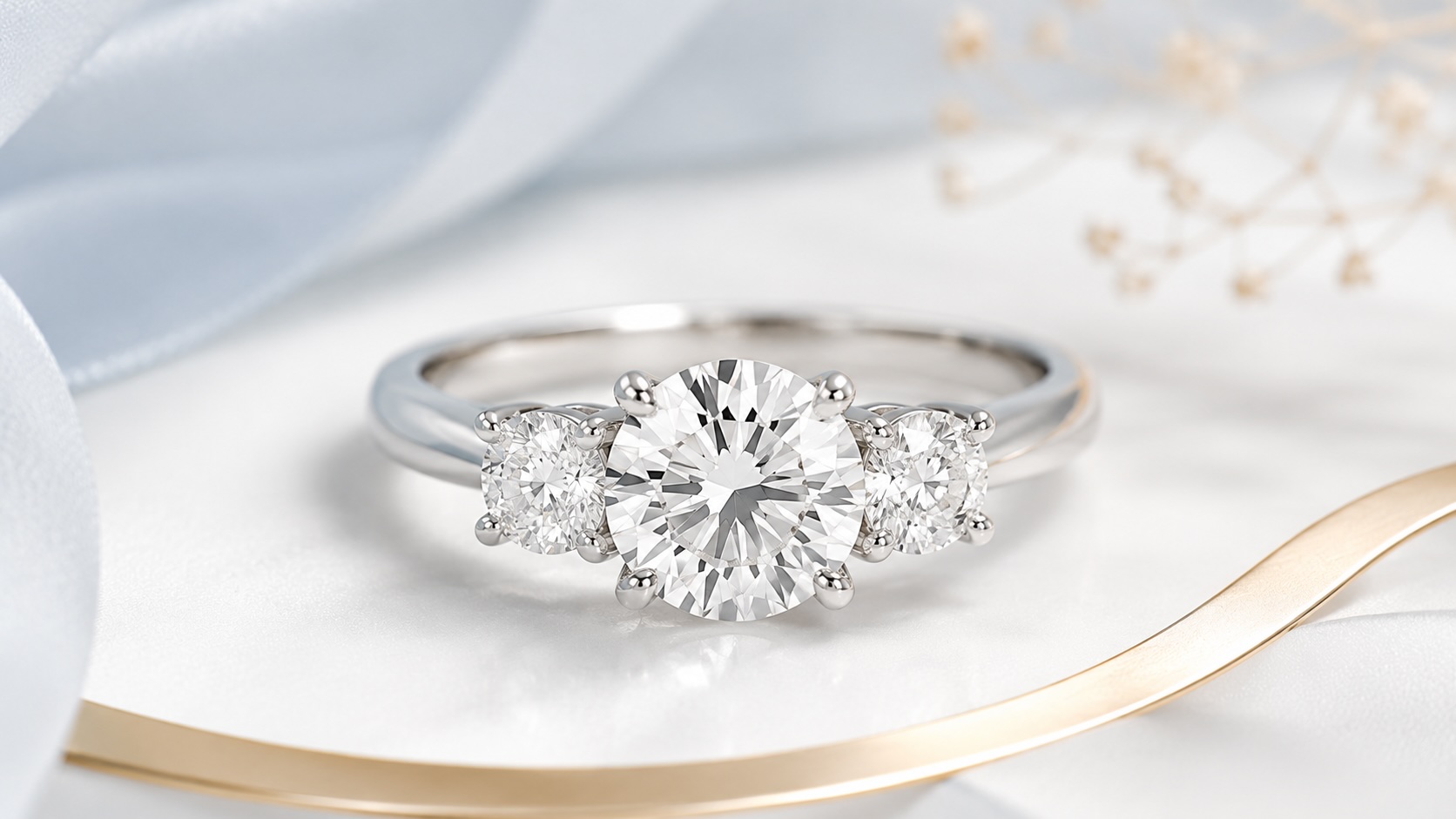
A three-stone engagement ring combines meaningful symbolism with impressive finger coverage. The stones traditionally represent a couple’s past, present and future, although they may also symbolize friendship, love and fidelity.
After comparing diamond quality, setting craftsmanship, customization, value and buyer protections, my top recommendation is Whiteflash. Its precision-cut diamonds, detailed light-performance imaging and designer settings make it the strongest choice for buyers who want exceptional sparkle and a carefully finished ring.
Blue Nile is best for selection, Ritani stands out for value and transparent pricing, Brilliant Earth is strongest for modern designs and sourcing-conscious shoppers, and Tiffany & Co. remains the prestige choice.
The Best Places to Buy Three-Stone Engagement Rings at a Glance
| Retailer | Best for | Diamond choices | Main advantage | Main consideration |
|---|---|---|---|---|
| Whiteflash | Best overall and best cut quality | Natural and lab-grown | Elite cut quality, advanced imaging and designer settings | More curated than the largest marketplaces |
| Blue Nile | Best selection | Natural and lab-grown | Large inventory and many setting combinations | Individual diamonds require careful comparison |
| Ritani | Best value | Natural and lab-grown | Competitive pricing and price transparency | Cut-quality information varies |
| Brilliant Earth | Best modern styles | Natural, lab-grown and gemstones | Distinctive designs and sourcing focus | Some settings carry a design premium |
| Tiffany & Co. | Best luxury option | Natural diamonds and select gemstones | Prestige, craftsmanship and long-term service | Substantial brand premium |
What Is a Three-Stone Engagement Ring?
A three-stone engagement ring has a center stone with one smaller stone on either side. It may also be described as a trilogy, trinity or past, present and future ring.
The classic version uses three round brilliant diamonds, but there are many alternatives. A round or oval center can be paired with pear-shaped side stones, while an emerald-cut center looks elegant with tapered baguettes. Some designs use three stones of similar size, while others make the center much more prominent.
This flexibility allows a three-stone ring to look traditional, vintage, minimalist or contemporary. It can also create more visual width than a solitaire without placing the entire budget into one very large center diamond.
Before comparing retailers, read my guide to diamond ring settings and explore the different diamond shapes. Both choices have a major effect on the balance of the finished ring.
1. Whiteflash: Best Overall for Cut Quality and Designer Settings
View three-stone engagement rings at Whiteflash
Whiteflash is my top choice because it places an unusually strong emphasis on diamond cut quality. That matters in every engagement ring, but especially when three diamonds are viewed together. Poorly matched light performance can make one stone appear bright while another looks dull or dark.
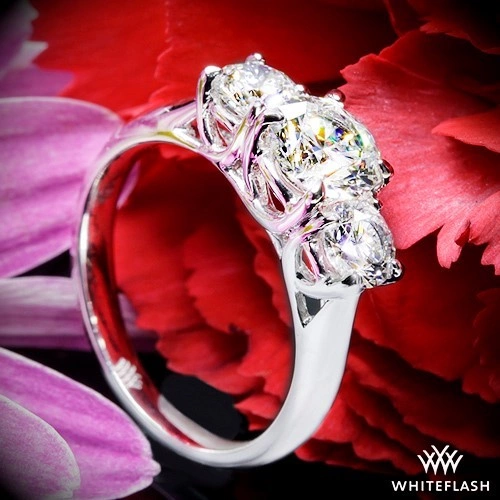
18k White Gold Trellis 3 Stone Engagement Ring from Whiteflash
Whiteflash is best known for its in-house A CUT ABOVE® super ideal diamonds. Its natural A CUT ABOVE diamonds include GIA grading reports, AGS Ideal light-performance reports and a detailed imaging package with tools such as ASET, Ideal-Scope, Hearts and Arrows images and 360-degree video. This provides more evidence of optical performance than a grading report alone.
The A CUT ABOVE range includes round and princess-cut diamonds, both of which work beautifully in three-stone designs. Buyers interested in other shapes can explore Whiteflash’s wider inventory, although its tightly vetted in-house selection remains the main attraction.
Whiteflash also offers settings from established bridal designers, alongside its own designs. The range includes classic three-diamond rings, trellis settings, pavé bands, vintage details and combinations using pear-shaped or tapered side stones.
Its consultants can help coordinate the center diamond, side stones and setting. This is important because size ratios, color consistency and cut quality all influence whether the finished ring looks balanced.
Why Whiteflash stands out:
- Exceptional emphasis on cut and light performance
- Detailed imaging for many in-house diamonds
- Premium designer and in-house settings
- Natural and lab-grown options
- Expert help with matching stones and proportions
Whiteflash has a more curated inventory than Blue Nile or Ritani, and its best diamonds may cost more than alternatives with similar grades on paper. That premium reflects tighter cutting standards, documentation and quality control.
Return periods vary by product category, so check the terms attached to the specific diamond and setting before ordering. Whiteflash currently offers a 30-day return period on eligible branded natural diamonds and qualifying catalog settings, while other categories may have different inspection periods.
Best for: Buyers who want the strongest combination of sparkle, documentation, craftsmanship and expert guidance.
Read my full Whiteflash review for a closer look at its diamonds and service.
2. Blue Nile: Best for Selection and Easy Customization
Shop three-stone engagement rings at Blue Nile
Blue Nile is one of the easiest places to compare a large number of diamonds and settings online. Its three-stone collection includes round side stones, tapered baguettes, pear-shaped accents, emerald-shaped side diamonds and pavé bands.
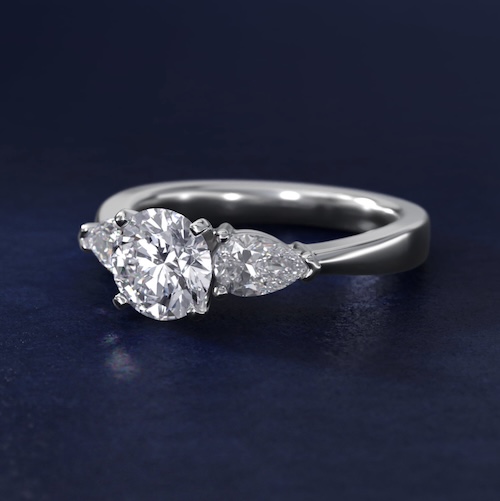
Classic Pear Shaped Diamond Engagement Ring in Platinum
The company is particularly useful when you already have a shape combination in mind. You can select a setting and compare center diamonds by shape, carat, color, clarity, price and certification. Both natural and lab-grown diamonds are available.
Many designs include the side diamonds in the setting price, leaving you to select the center diamond separately. This simplifies the process, but you should still check the listed color, clarity and total weight of the side stones.
Blue Nile’s scale is especially valuable for fancy shapes. Shoppers looking for oval, cushion, emerald, radiant, pear or Asscher-cut center diamonds may find more choices here than at a smaller specialist. Virtual appointments are also available for buyers who want help comparing options.
Eligible purchases generally have a 30-day return period from the shipment date, subject to exclusions for altered, engraved, customized or final-sale items.
Why choose Blue Nile:
- Large natural and lab-grown inventory
- Broad range of three-stone settings
- Strong availability of fancy shapes
- Straightforward design process
- Virtual appointments and established aftercare
More choice also means more responsibility. Diamonds with similar grades can perform differently, and fancy shapes do not receive the same overall GIA cut grade as round brilliants. Examine the actual diamond video and look for bow ties, windowing, dark areas and uneven facet patterns. GIA currently assigns an overall cut grade only to standard round brilliant diamonds.
My diamond cut guide explains why cut should take priority over simply buying the largest carat weight.
Best for: Shoppers who want broad selection, flexible budgets and an easy build-your-own-ring experience.
Read my full Blue Nile review before purchasing.
3. Ritani: Best for Value and Price Transparency
Browse three-stone engagement rings at Ritani
Ritani is a strong choice for value-conscious buyers who still want a properly designed three-stone ring. It offers natural and lab-grown center diamonds, multiple shapes and settings with pear, round or tapered side stones.
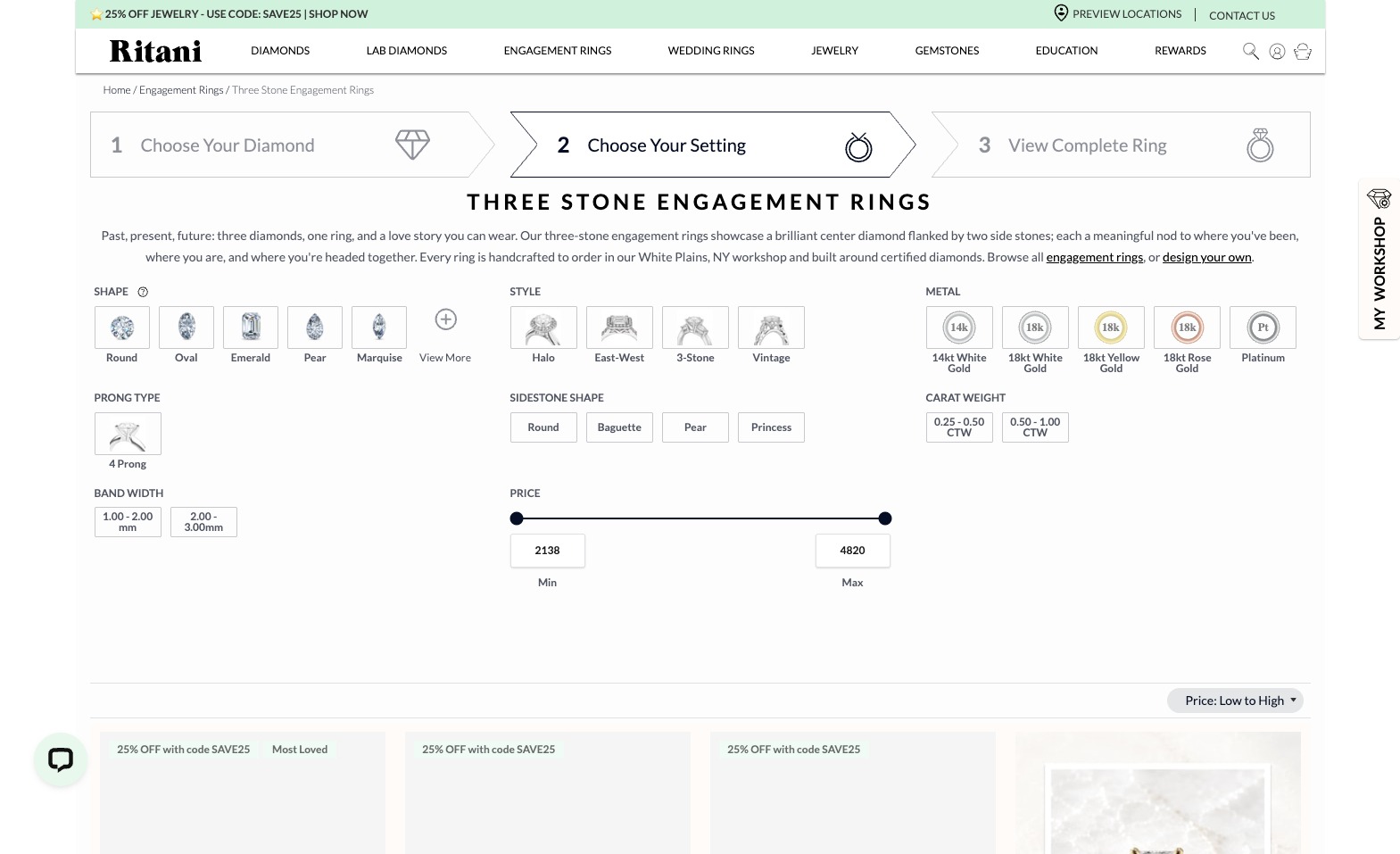
The company is known for price transparency, making it easier to understand how a diamond’s price compares with associated costs and markups. Price should not be the only factor, however. A poorly cut diamond is not good value simply because it is cheaper.
Ritani’s range includes classic and modern options for oval, cushion, round, Asscher and other center shapes. Many rings are handcrafted to order, and in-person preview options are available in supported locations. This hybrid approach appeals to shoppers who want online pricing but would prefer to inspect a ring before committing.
Eligible loose diamonds, lab-grown diamonds, engagement rings and jewelry can generally be returned within 30 days of delivery. Preview availability, shipping costs and return terms may differ by location.
Why choose Ritani:
- Competitive natural and lab-grown diamond pricing
- Helpful price transparency
- Attractive modern shape combinations
- In-person preview options in eligible areas
- Good potential for maximizing size within a budget
Ritani operates across a broad diamond marketplace, so imagery and cut information can vary. Certification verifies important characteristics but does not guarantee that every diamond will be equally attractive. Read my guide to diamond certification before relying on a report alone.
Best for: Buyers who want competitive prices and are comfortable comparing individual diamonds carefully.
My Ritani review covers its strengths and limitations in more detail.
4. Brilliant Earth: Best for Modern Designs and Sourcing Priorities
Explore three-stone engagement rings at Brilliant Earth
Brilliant Earth has one of the most distinctive three-stone collections among major online retailers. Alongside classic designs, it offers sculptural, nature-inspired, twisted-vine, pavé and mixed-metal settings.
Many settings can be paired with natural diamonds, lab-grown diamonds or colored gemstones. This is useful for buyers considering sapphire side stones, a colored center gem or a lab-grown diamond that provides more size for the budget.
Settings are available in platinum and 14K or 18K white, yellow and rose gold. The collection is strongest for shoppers who want the setting itself to have a clear design identity rather than acting only as a frame for the diamonds.
Brilliant Earth combines online shopping with showrooms and virtual appointments. Eligible items generally include free 30-day returns, with resizing support available subject to the ring style and order terms.
Why choose Brilliant Earth:
- Contemporary and nature-inspired designs
- Natural, lab-grown and gemstone options
- Broad metal choices
- Showrooms and virtual consultations
- Strong sourcing and repurposed-material messaging
Some of its most distinctive settings carry a premium. Compare the center diamond and setting costs separately before judging overall value.
Sourcing information is important, but it should not replace normal diamond checks. You still need a reputable grading report, clear imagery and a careful assessment of cut. My guide on whether to buy a lab-grown diamond explains the main trade-offs.
Best for: Buyers seeking a modern or nature-inspired ring, particularly with a lab-grown diamond or gemstone.
Read my Brilliant Earth review for more information.
5. Tiffany & Co.: Best Luxury and Prestige Choice
View Tiffany three-stone engagement rings
Tiffany’s three-stone collection is much smaller than the ranges offered by large online marketplaces, but it is an unmistakable luxury proposition. The appeal lies in the complete package: brand heritage, matched stones, refined proportions, presentation and long-term service.
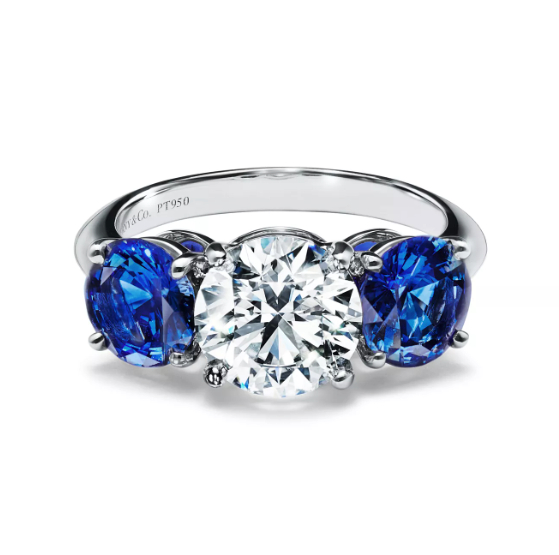
Tiffany Three Stone : Engagement Ring with Sapphire Side Stones in Platinum
The collection includes platinum designs with a round brilliant center diamond and round, pear-shaped or tapered baguette side diamonds, plus a version with sapphire side stones. The designs are restrained and elegant, with the center remaining the focal point.
Tiffany states that its round brilliant engagement diamonds receive triple excellent cut grades. Its engagement rings are supported by the Tiffany Diamond Certificate and access to ongoing services such as cleaning, polishing, setting inspections and sizing assessments.
This is not the best retailer for comparing hundreds of loose diamonds or switching between dozens of settings. It is for someone who specifically wants a Tiffany ring and values the name, craftsmanship, boutique experience and Tiffany Blue Box.
Why choose Tiffany:
- Iconic luxury brand
- Carefully coordinated designs
- Refined craftsmanship and proportions
- Diamond certificate and long-term service
- Strong boutique consultation experience
Tiffany charges a substantial premium. A similar budget may secure a larger center diamond or more detailed light-performance information from a specialist. The collection also offers less freedom for unusual shapes, lab-grown diamonds or extensive online customization.
Best for: Buyers who specifically want an iconic luxury ring and accept the premium attached to the Tiffany name and experience.
Read my Tiffany engagement ring review for a deeper analysis.
How I Chose the Best Retailers
I compared each retailer based on diamond quality and transparency, setting craftsmanship, customization, certification, returns and aftercare.
Three-stone rings require more coordination than solitaires. The setting contains more prongs and baskets, while the center and side stones must be matched for color, proportions and visual performance. A retailer therefore needs to offer more than a large inventory. It should also provide enough information and support to help the buyer create one coherent ring.
How to Choose a Three-Stone Engagement Ring
1. Put Cut Quality First
Cut determines how effectively a diamond returns light. In a three-stone ring, differences are easy to notice because the diamonds sit next to each other. Aim for consistent brightness rather than choosing one excellent center stone and accepting lifeless side diamonds.
For round brilliants, begin with reputable grading and strong proportions, then use videos and light-performance images where available. Fancy shapes require visual inspection because shapes such as oval, emerald, pear and cushion do not receive a universal GIA cut grade.
2. Decide How Dominant the Center Should Be
A traditional design uses a clearly larger center with two matched side stones. Larger side stones create a bolder wall of sparkle, while smaller sides keep the ring closer to a solitaire.
Neither approach is automatically better, but the ratio should look intentional. Review photographs from the top and side, and request real-life images when computer renderings make the proportions unclear.
3. Match Color Carefully
The diamonds do not always need the exact same color grade, but they should look consistent when set together.
Brilliant-cut side stones may disguise a small color difference because of their sparkle. Step-cut baguettes show body color more readily, so closer matching may be important.
Yellow or rose gold can complement slightly warmer diamonds, while platinum and white gold may emphasize color differences. My diamond color guide explains how color affects appearance and price.
4. Choose Eye-Clean Clarity
You rarely need flawless diamonds. The goal should usually be stones without visible inclusions at normal viewing distance.
The center deserves the closest inspection. Side stones are smaller, so inclusions are often harder to see, although durability issues still matter. Do not pay for microscopic purity at the expense of cut.
My diamond clarity guide explains which inclusions matter and where value can often be found.
5. Select Complementary Shapes
Popular combinations include:
- Round center with round sides for classic sparkle
- Round center with tapered baguettes for a refined look
- Oval center with pear sides for graceful finger coverage
- Emerald center with tapered baguettes for Art Deco styling
- Cushion center with half-moon or trapezoid sides
- Three emerald or Asscher cuts for a clean step-cut design
- Diamond center with sapphire sides for color and contrast
Mixed cuts reflect light differently. Brilliant cuts create scintillation and fire, while step cuts produce broader flashes. The contrast should look deliberate.
6. Pick the Right Metal
Platinum is naturally white and well suited to securing multiple diamonds, although it usually costs more. White gold offers a similar appearance at a lower initial price but may need periodic rhodium replating.
Yellow gold adds warmth and can contrast beautifully with white diamond heads. Rose gold feels softer and more romantic, although it is less widely available in traditional trilogy settings.
My comparison of platinum, white gold, yellow gold and rose gold covers cost, color and maintenance.
7. Consider Natural Versus Lab-Grown Diamonds
A lab-grown three-stone ring can provide more visual size for the budget, which is significant when paying for a center diamond and two side stones.
Natural diamonds remain the traditional choice and have different scarcity and value-retention characteristics. Lab-grown diamonds share the fundamental optical and chemical properties of natural diamonds, but their market prices have fallen as production has increased.
Choose according to your priorities. The retailer should clearly identify the diamond type and provide an appropriate grading report.
8. Check the Wedding Band Fit
Some three-stone baskets extend across the finger or sit low against the shank, preventing a straight wedding band from sitting flush.
Ask to see the engagement ring beside a wedding band before buying. A contoured or custom-fitted band may be needed. Look for a raised gallery when a flush fit is important.
How to Get the Best Value
Protect cut quality first. Reducing color or clarity slightly is usually better than accepting a poorly cut center diamond.
Consider weights just below popular thresholds. A 0.90-carat center may cost less than a 1.00-carat diamond while appearing similar in diameter. My guide to diamond carat explains how weight affects price.
Compare total carat weight carefully. Some retailers advertise the combined weight of all three diamonds, while others list only the side-stone weight in the setting.
Simpler metalwork can also reduce the price. Pavé, halos, hand engraving and designer details add beauty, but they increase the setting cost and maintenance needs.
Finally, do not assume the lowest listed price represents the best value. Reliable certification, strong imagery, return protection and expert matching can prevent a costly mistake.
Frequently Asked Questions
What do the three stones mean?
The most common interpretation is past, present and future. The center usually represents the present and is made larger to emphasize the relationship today. The stones may also have a personal meaning chosen by the couple.
Are three-stone rings more expensive than solitaires?
They can be because the setting includes two additional diamonds and more complex metalwork. However, a three-stone design can create greater finger coverage without requiring an exceptionally large center diamond.
What is the best diamond shape?
Round diamonds are the most versatile and provide strong brilliance. Oval, cushion, emerald and radiant centers are also excellent choices. Pears and tapered baguettes are popular side stones because they create a smooth transition into the band.
Should all three diamonds have the same grades?
They do not need identical color and clarity grades, but they should look matched. Minor clarity differences may be impossible to see in smaller side stones. Color differences can be more obvious, especially with step cuts and white metals.
Can gemstones be used as side stones?
Yes. Sapphires are a classic choice, while rubies and other durable gemstones can add color and personal significance. Make sure the stones are suitable for daily wear and properly protected.
Are three-stone rings secure?
A well-made ring is suitable for everyday wear, but it has more prongs and stones to inspect than a solitaire. Have the setting checked periodically and remove the ring for activities that could knock or catch the prongs.
Which retailer is best?
Whiteflash is my best overall choice for cut quality, performance information and designer settings. Blue Nile offers the broadest selection, Ritani is strong for value, Brilliant Earth excels in modern styling and Tiffany is the standout luxury option.
Final Verdict
The best three-stone engagement ring should look balanced from every angle. The center needs to command attention, the side stones should complement it, and the setting must secure all three without appearing heavy.
For the best overall combination of diamond performance, documentation, craftsmanship and expert guidance, I recommend Whiteflash. Its in-house precision-cut diamonds are especially valuable in a design where differences in sparkle can be seen side by side.
Blue Nile is the best place to start when selection is the priority. Ritani provides competitive pricing and transparency, Brilliant Earth offers stylish contemporary alternatives, and Tiffany delivers an unmistakable luxury experience.
Whichever retailer you choose, prioritize cut quality, examine the actual diamonds and confirm the return and resizing terms before completing the order. A successful three-stone ring is not simply three attractive diamonds. It is one composition, and every part needs to work together.
