

Can You Put a Bigger Diamond in an Existing Engagement Ring?
July 20, 2026
What Size Diamond Can You Buy for $5,000? Natural vs. Lab-Grown
August 10, 2026A Guide to Buying a 3/4 Carat Diamond
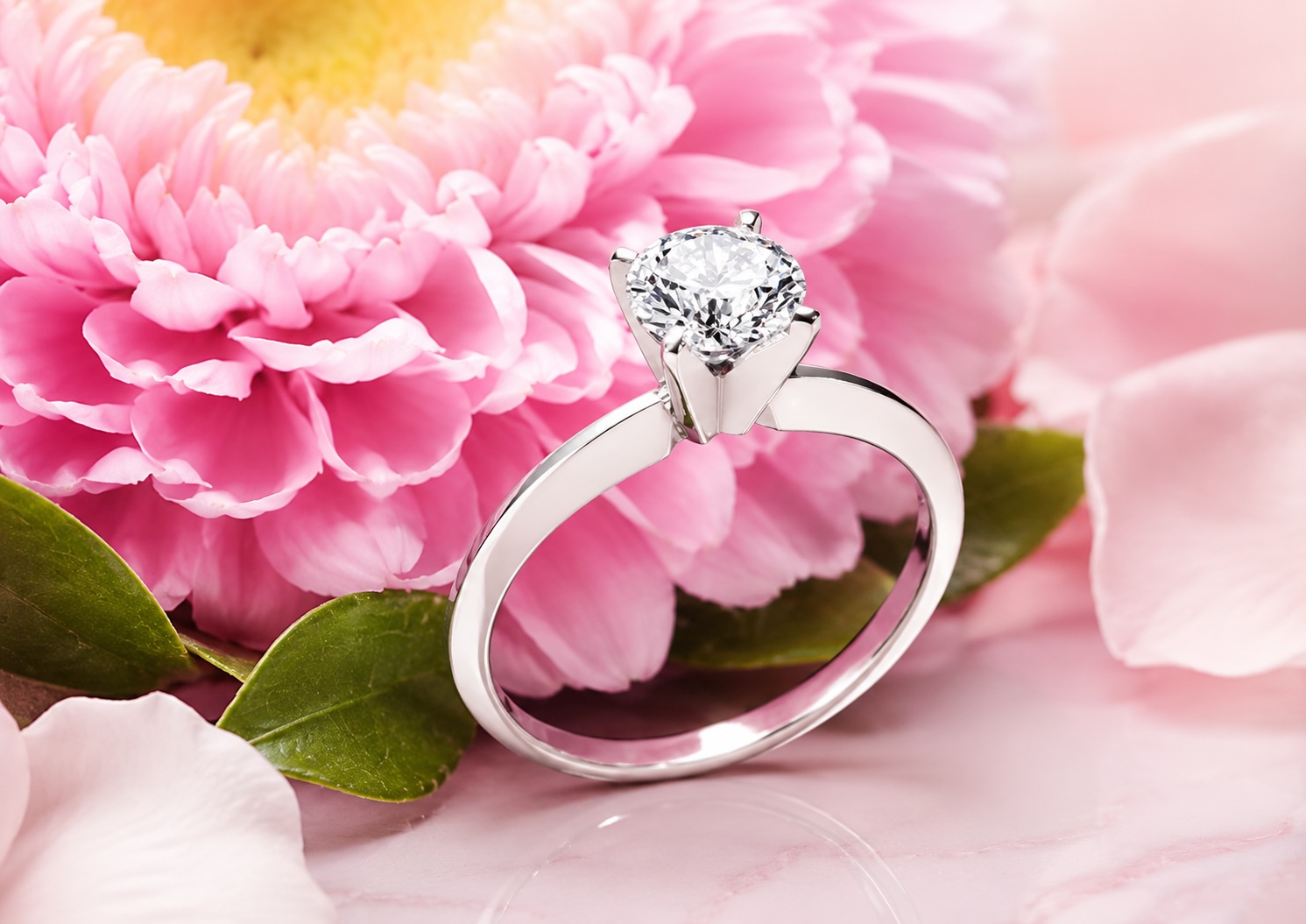
A 3/4 carat diamond, also written as a 0.75 carat diamond, is one of the best sizes to consider if you want a substantial-looking diamond without paying the premium associated with the 1 carat milestone.
At 75 points, a well-cut 0.75 carat diamond can have plenty of presence on the finger, particularly when paired with the right shape and setting. More importantly, choosing a diamond below 1 carat can leave more of your budget available for the characteristics that have the biggest impact on beauty, particularly cut quality.
For most buyers, I would rather see the budget spent on an exceptionally well-cut 0.75 carat diamond than stretched toward a poorly cut 1 carat stone.
In this guide, I will explain how big a 3/4 carat diamond looks, which color and clarity grades offer the best value, which shapes work particularly well at this weight, and where I recommend shopping.
Quick Takeaways
- A 3/4 carat diamond weighs 0.75 carats, or 75 points.
- A well-proportioned 0.75 carat round brilliant will typically measure around 5.8 to 6.0 mm across, although dimensions vary from diamond to diamond.
- Do not sacrifice cut quality simply to reach a higher carat weight.
- For natural diamonds, G-H color and VS2-SI1 clarity can provide an excellent combination of appearance and value.
- Always look for a diamond with a grading report from a respected laboratory.
- Elongated shapes such as oval, pear, and marquise diamonds can appear larger than round diamonds of the same carat weight.
- My first choice for buyers prioritizing exceptional cut quality is Whiteflash, while Blue Nile is particularly strong if you want a huge selection to compare.
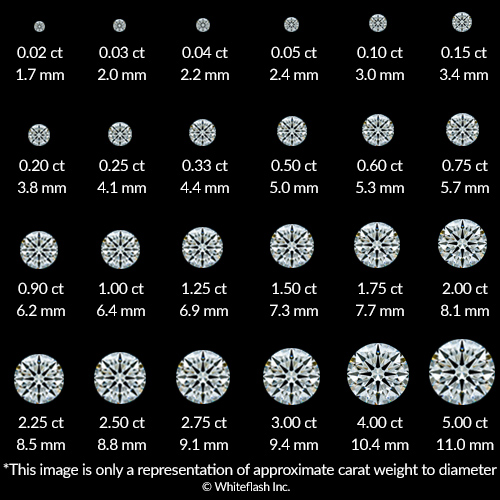
Image courtesy Whiteflash.com
What Is a 3/4 Carat Diamond?
A 3/4 carat diamond is simply another way of describing a diamond weighing 0.75 carats.
Diamond carat is a measurement of weight rather than physical dimensions. One carat weighs 200 milligrams, which means a 0.75 carat diamond weighs approximately 150 milligrams.
You may also hear a jeweler describe it as a 75-point diamond, because each carat is divided into 100 points.
You can read my complete guide to diamond carat weight for a more detailed explanation of how weight relates to size and diamond pricing.
One important point is that two 0.75 carat diamonds do not necessarily look the same size.
A poorly proportioned diamond may hide too much of its weight in its depth, resulting in a smaller face-up appearance. A well-cut diamond distributes its weight effectively while maintaining the proportions needed for strong light performance.
This is one reason I strongly recommend looking beyond the carat figure itself.
How Big Is a 3/4 Carat Diamond?
A well-cut 0.75 carat round brilliant diamond will generally measure approximately 5.8 to 6.0 mm in diameter.
That is large enough to create a noticeable center stone without dominating the hand.
However, different diamond shapes distribute their weight differently.
| Diamond Shape | How a 0.75 Carat Diamond Tends to Look |
|---|---|
| Round | Balanced size with maximum emphasis on brilliance |
| Oval | Usually appears larger because of its elongated outline |
| Pear | Good finger coverage and an elongated appearance |
| Marquise | One of the largest-looking shapes for its carat weight |
| Cushion | Can appear slightly smaller depending on proportions |
| Princess | Strong face-up presence with a square shape |
| Emerald | Elegant and elongated, but demands higher clarity |
| Asscher | Often appears smaller because more weight is carried in its depth |
This is why it is important to examine the actual millimeter measurements on the diamond’s grading report rather than assuming every 0.75 carat stone will have identical dimensions.
Is 0.75 Carat a Good Size for an Engagement Ring?
Absolutely.
A 0.75 carat diamond hits a particularly attractive middle ground between smaller half-carat diamonds and the traditional 1 carat target.
There are three major advantages.
First, it is large enough to work beautifully as a solitaire center diamond.
Second, the difference between a well-cut 0.75 carat and a 1 carat diamond is often less dramatic on the finger than buyers expect when looking only at their respective weights.
Third, avoiding the psychologically important 1 carat milestone can allow you to put more money toward cut quality, setting quality, or simply reduce the overall cost of the engagement ring.
Diamond pricing does not rise in a perfectly straight line as carat weight increases. Certain milestone weights attract additional demand, which can influence the price per carat. I explain this in greater detail in my diamond pricing guide.
0.75 Carat vs. 1 Carat Diamond
If you are deciding between a 3/4 carat and 1 carat diamond, do not assume bigger automatically means better.
| 0.75 Carat | 1.00 Carat | |
|---|---|---|
| Weight | 0.75 ct | 1.00 ct |
| Points | 75 | 100 |
| Approx. round diameter | 5.8-6.0 mm | Around 6.4-6.5 mm |
| Visual presence | Noticeable | Larger |
| Typical price | Lower | Higher |
| Value potential | Excellent | Depends heavily on specs |
| Best for | Balancing quality, size, and budget | Buyers prioritizing the 1 ct milestone |
A badly cut 1 carat diamond can actually be less attractive than an outstanding 0.75 carat diamond.
Cut determines how effectively the facets interact with light, influencing brightness, fire, and scintillation. GIA also identifies cut as a critical factor in the beauty of a round brilliant diamond. (4cs.gia.edu)
For a deeper explanation, read my guide to diamond cut quality.
What Are the Best Specifications for a 3/4 Carat Diamond?
There is no universal specification that every buyer should choose. Your priorities, setting, and budget all influence the answer.
However, if I were looking for a natural 0.75 carat round diamond with a strong balance between quality and value, I would generally begin around:
- Carat: 0.70-0.79 ct
- Cut: Exceptional/Ideal or carefully selected GIA Excellent
- Color: G-H
- Clarity: VS2-SI1, provided it is eye clean
- Certification: GIA
- Fluorescence: None to Medium, assessed on the individual diamond
- Polish: Excellent
- Symmetry: Excellent
These are starting points rather than absolute rules.
Cut: Make This Your Priority
For a round 3/4 carat diamond, cut should be the first place you put your money.
A diamond can receive impressive grades for color and clarity yet still look disappointing if its proportions result in poor light return.
This is also why I prefer retailers that provide detailed diamond photography, video, and, ideally, light-performance information rather than asking you to purchase from a grading report alone.
GIA’s cut grading system evaluates factors including brightness, fire, scintillation, proportions, polish, and symmetry. (4cs.gia.edu)
If you want to get more technical, my guide to diamond table and depth percentages explains how proportions influence face-up appearance and light performance.
What Color Should a 0.75 Carat Diamond Be?
You do not necessarily need a D, E, or F color diamond.
GIA divides its D-to-Z scale into several groups, with D-F considered colorless and G-J classified as near colorless. Differences between neighboring grades can be very subtle, even though they can affect price considerably. (4cs.gia.edu)
For many 0.75 carat diamonds, G or H color represents an excellent starting point.
These grades can face up beautifully white while avoiding some of the premiums attached to the highest color grades.
You may also be able to consider I or even J depending on:
- The shape of the diamond
- Cut quality
- Your sensitivity to warmth
- The metal used for the setting
- Whether the diamond will be viewed beside higher-color accent diamonds
Yellow and rose gold settings can be particularly forgiving of slightly warmer diamonds.
Read my complete diamond color guide or the official GIA diamond color guide before deciding how high you need to go.
What Clarity Is Best for a 0.75 Carat Diamond?
My aim with clarity is simple: buy an eye-clean diamond rather than paying for microscopic perfection you cannot see.
A flawless or VVS diamond sounds impressive on paper, but much of the additional clarity may be invisible without magnification.
For a 3/4 carat round brilliant, VS2 can offer a very comfortable balance, while carefully selected SI1 diamonds can offer even better value.
The individual diamond matters more than the letters alone.
Look at:
- The type of inclusion
- Its location
- Its size
- Whether it is visible face-up
- Whether it creates durability concerns
- Whether multiple inclusions affect transparency
Fancy shapes need additional care. Emerald and Asscher diamonds have large, open facets that tend to reveal inclusions more readily, so I would normally consider stepping up in clarity.
My diamond clarity and inclusions guide explains what the different grades actually mean and which inclusions deserve closer attention.
Always Check the Diamond Certification
A grading report gives you an independent assessment of the characteristics you are paying for.
For natural diamonds, I generally recommend giving preference to diamonds graded by the Gemological Institute of America (GIA).
Do not simply compare two diamonds advertised as “G VS2” without checking who issued the grading report. Different laboratories have historically applied different grading standards, which can make apparent bargains difficult to compare accurately.
Read my full guide to diamond certification before making a purchase.
Should You Consider a 0.70-0.74 Carat Diamond Instead?
Yes.
This is one of my favorite strategies for value-focused buyers.
If you originally intended to purchase exactly 0.75 carats, expand your search slightly and compare diamonds from approximately 0.70 to 0.79 carats.
You may discover a beautifully cut 0.72 or 0.74 carat diamond that looks virtually identical once set but offers better overall specifications for your budget.
Never become fixated on the number on the grading report.
The goal is not to buy the heaviest diamond you can afford. It is to buy the most beautiful diamond your budget allows.
Which Diamond Shape Is Best at 0.75 Carats?
Round Brilliant
The round brilliant is my first choice if maximum sparkle is the goal.
Its standardized facet structure also makes cut quality easier to assess than with fancy shapes.
A beautifully cut 0.75 carat round can have tremendous brightness and presence.
Oval
Oval diamonds are an excellent option for buyers who want their 0.75 carat diamond to look larger.
Their elongated surface gives greater finger coverage, although you need to inspect the diamond carefully for bow-tie effects and uneven light return.
Pear
A pear diamond combines characteristics of round and marquise shapes and can give excellent visual coverage at 0.75 carats.
Pay close attention to symmetry and the attractiveness of the outline.
Marquise
If visual size is the priority, marquise diamonds are difficult to beat.
Their long, narrow shape can make a 0.75 carat diamond appear substantially larger than its weight suggests.
Cushion
Cushions provide a softer and more romantic appearance, although their dimensions can vary enormously.
Compare measurements carefully because some cushion diamonds carry more weight beneath the surface than others.
Emerald
A 0.75 carat emerald cut can look extremely elegant, especially in a simple setting.
However, because emerald diamonds use large step-cut facets rather than the brilliant faceting of a round diamond, clarity and transparency become particularly important.
Read my complete diamond shape guide before settling on a particular style.
Which Setting Makes a 3/4 Carat Diamond Look Bigger?
The setting can dramatically alter how substantial a 0.75 carat center stone appears.
Solitaire
A simple solitaire keeps all attention on the center stone and is particularly effective when the diamond itself has exceptional cut quality.
A thin band can also make the center diamond look proportionally larger.
Halo
A halo surrounds the center diamond with smaller accent diamonds, dramatically increasing the overall visual footprint.
If you love the appearance of a 1 carat or larger ring but want to keep the center diamond at 0.75 carats, a halo is worth considering.
Pavé
A pavé band provides additional sparkle without overwhelming the center diamond.
Three-Stone
Adding smaller side diamonds creates a larger overall diamond presence while maintaining the 0.75 carat stone as the focal point.
Bezel
A bezel provides excellent protection and can give the diamond a clean, contemporary outline. It is particularly appealing for someone with an active lifestyle.
My guide to diamond ring settings covers these options in much greater detail.
Where Is the Best Place to Buy a 3/4 Carat Diamond?
The retailer you choose matters almost as much as the specifications.
I want to see strong certification, high-quality imagery, knowledgeable support, sensible policies, and enough information to properly evaluate the diamond before buying.
These are the five retailers I would consider.
1. Whiteflash: Best for Cut Quality
My first choice is Whiteflash.
The main reason is cut quality.
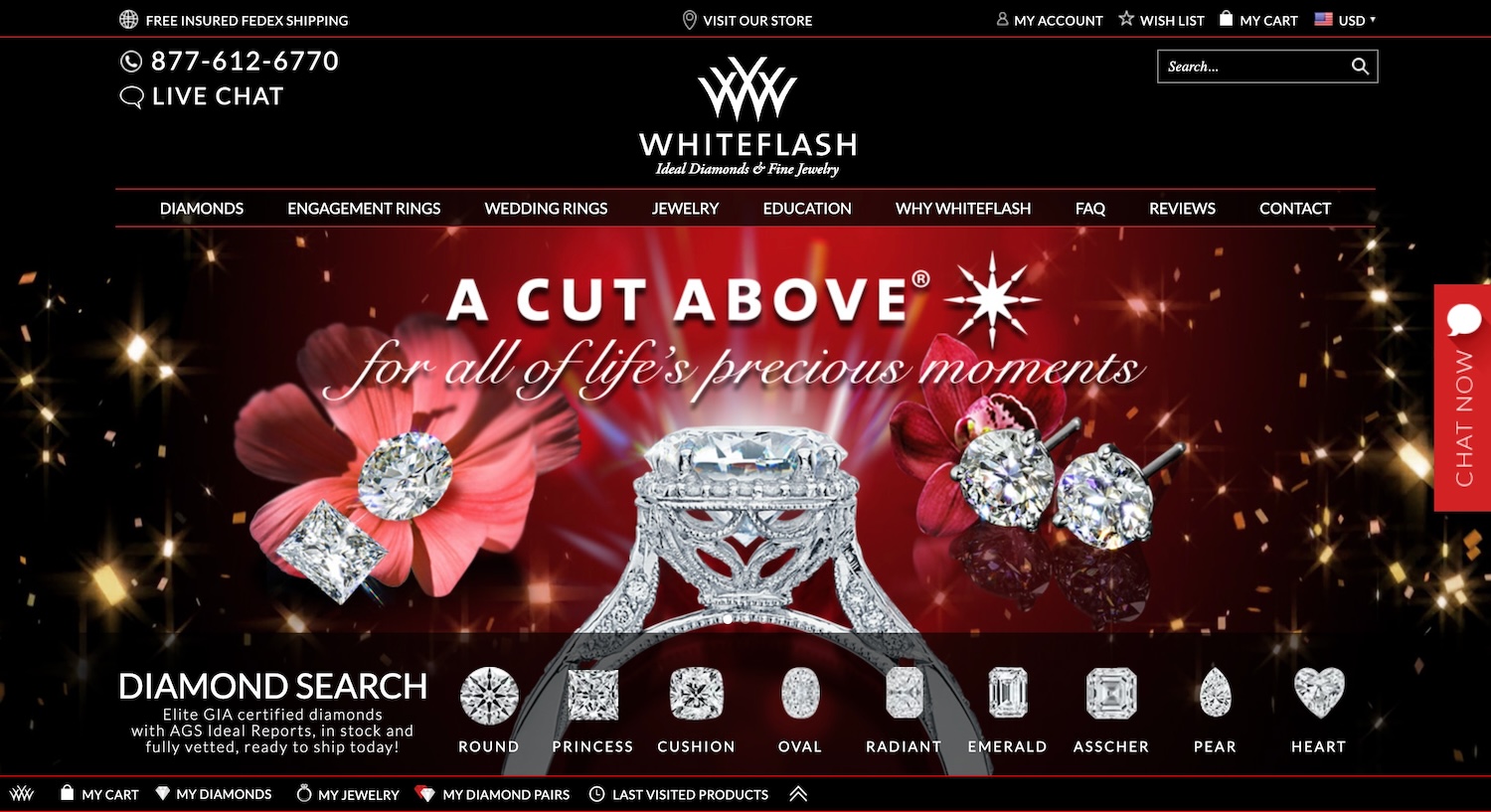
Rather than simply offering an enormous database of diamonds, Whiteflash has built its reputation around precision-cut diamonds and particularly its A CUT ABOVE® range.
This approach makes a lot of sense at 0.75 carats. If you are intentionally choosing a slightly lower carat weight to maximize quality, spending the available budget on exceptional cut performance is exactly what I would prioritize.
Detailed imaging and light-performance information also make it easier to understand why one diamond may outperform another rather than relying solely on the basic 4Cs.
For a 0.75 carat round brilliant where sparkle and cut precision are the priority, Whiteflash is my top recommendation.
2. Blue Nile: Best for Selection
Blue Nile remains one of the biggest names in online diamond retail and is particularly useful when you want to compare a large number of diamonds.
Its broad inventory makes it easy to adjust your filters around the 0.75 carat point.
Instead of searching exclusively for 0.75 carats, I would use Blue Nile to compare diamonds from around 0.70 through 0.79 carats. This lets you see exactly what additional color, clarity, or cut quality your budget can obtain by moving slightly above or below the target weight.
If selection and easy comparison are your priorities, Blue Nile is a strong option.
3. Ritani: Best for Value-Focused Comparison
Ritani is another retailer worth adding to your comparison list, particularly if value is a major consideration.
There can be meaningful price differences between diamonds with seemingly similar grading specifications, so comparing inventory across several retailers is always worthwhile.
At this carat weight, I would use Ritani to identify competitive options before carefully examining the grading report, proportions, and available imagery.
Do not automatically choose the least expensive diamond. A lower price is only attractive if the diamond itself performs well.
Read my complete Ritani review before deciding.
4. Brilliant Earth: Best for Modern Designs and Lab-Grown Choice
Brilliant Earth has built a recognizable position around sourcing, contemporary jewelry designs, and a large selection of natural and lab-grown diamonds.
It is particularly worth considering if the setting is an important part of your decision or if you are still deciding between a natural and lab-grown diamond.
If you like modern engagement ring designs and want a wide range of combinations to explore, browse the options and then read my full Brilliant Earth review before purchasing.
5. Tiffany & Co.: Best for Luxury Brand Prestige
There is a completely different reason to consider Tiffany & Co..
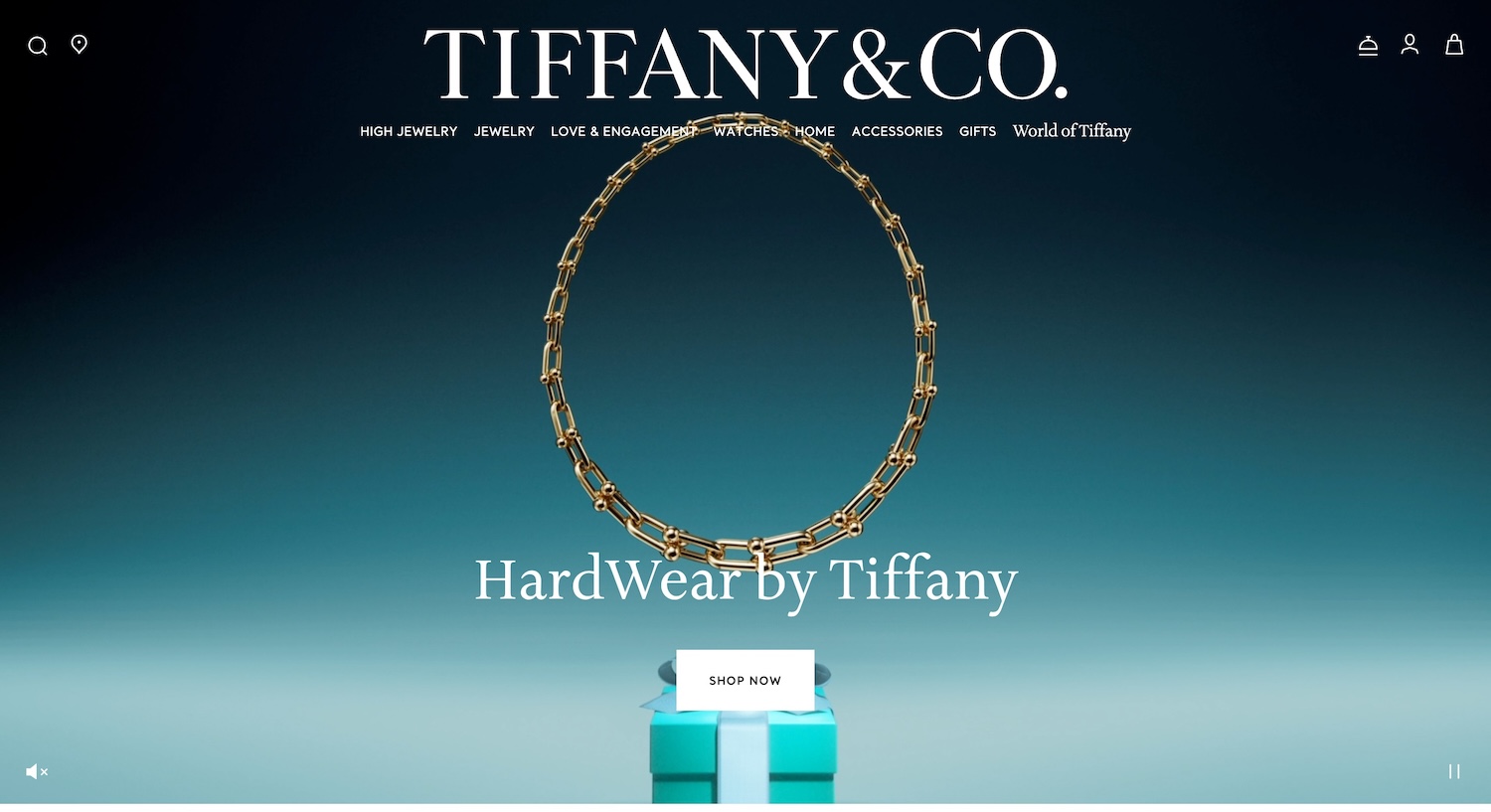
You are not shopping at Tiffany simply to find the lowest price per carat.
You are buying the Tiffany name, presentation, craftsmanship, history, and the experience associated with one of the world’s most recognizable jewelry brands.
The famous Tiffany Setting is also one of the most iconic solitaire engagement ring designs ever created.
The trade-off is price. If your primary objective is maximizing diamond quality for your money, specialist online retailers can generally provide more flexibility. If owning a genuine Tiffany engagement ring is part of the appeal, that brand value may justify the premium to you.
Read my complete Tiffany & Co. engagement ring review before deciding whether the premium makes sense for your priorities.
Comparing the Best Places to Buy a 0.75 Carat Diamond
| Retailer | Best For | My View |
|---|---|---|
| Whiteflash | Cut quality | Best overall choice for exceptional cut and light performance |
| Blue Nile | Selection | Excellent for comparing a huge number of options |
| Ritani | Value | Worth checking for competitively priced diamonds |
| Brilliant Earth | Modern designs and lab-grown options | Strong choice for design variety |
| Tiffany & Co. | Luxury and brand prestige | Iconic, but expect to pay for the name |
Should You Buy a Lab-Grown 3/4 Carat Diamond?
You can, although buyers considering lab-grown diamonds may find themselves questioning whether 0.75 carats is still the right target.
Lab-grown diamonds cost substantially less than comparable natural diamonds, which means the same budget may allow you to move to a significantly larger carat weight.
They are diamonds rather than diamond simulants and possess essentially the same physical, chemical, and optical characteristics as natural diamonds. The fundamental difference is their origin.
The choice therefore becomes personal.
If you specifically want a natural diamond, 0.75 carats can represent an excellent balance between size, quality, and price.
If you are comfortable with lab-grown and your primary objective is maximizing visual size, it makes sense to compare 1 carat and larger lab-grown diamonds before committing to 0.75 carats.
Read my guide on whether you should buy a lab-grown diamond for a more detailed comparison.
Don’t Forget Fluorescence
Fluorescence is another characteristic listed on a diamond grading report.
It describes how a diamond reacts to ultraviolet light and is graded by GIA from None through Very Strong.
Fluorescence should not automatically disqualify a diamond. Its actual effect needs to be considered on the individual stone, particularly at stronger levels.
You can learn more in my complete guide to diamond fluorescence.
My Recommended 3/4 Carat Diamond Specifications
For someone asking me to find a high-quality natural 0.75 carat round brilliant without unnecessarily paying for grades they cannot appreciate visually, my search would look something like this:
Carat: 0.70-0.79 ct
Cut: Prioritize exceptional light performance
Color: G-H
Clarity: VS2 or an eye-clean SI1
Certification: GIA
Polish: Excellent
Symmetry: Excellent
Fluorescence: Assess individually
Retailer: Whiteflash first, followed by comparisons at Blue Nile and Ritani
I would be perfectly happy to drop from 0.75 to 0.72 or 0.73 carats if doing so resulted in a noticeably better-cut diamond.
I would not sacrifice cut simply to get 0.75 printed on the grading report.
Is a 3/4 Carat Diamond Worth It?
For many buyers, yes.
A 3/4 carat diamond is large enough to create an elegant and noticeable engagement ring while remaining below the 1 carat milestone that attracts so much attention from shoppers.
It also gives you flexibility.
Choose a round brilliant if sparkle is the priority. Look at oval, pear, or marquise shapes if you want more visual size. Add a halo if you want greater finger coverage. Choose a simple solitaire if you want the diamond itself to remain the focus.
Most importantly, prioritize quality rather than chasing carat weight.
A beautifully cut 0.75 carat diamond can be brighter, livelier, and more impressive than a heavier diamond with mediocre proportions.
For this reason, my first stop would be Whiteflash for buyers prioritizing cut quality. I would then compare the wider inventory available through Blue Nile and the value-focused options at Ritani. Brilliant Earth is particularly worth exploring for modern settings and buyers considering lab-grown diamonds, while Tiffany & Co. remains the luxury choice for someone who specifically wants the prestige of the Tiffany name.
Whichever route you take, remember the most important rule: buy the diamond that looks best, not simply the diamond with the biggest number on its certificate.
